













Heroscape: Gathering Storm Strategy Guide
Posted by Ken Williams on Apr 17th 2026
Heroscape’s newest release, Gathering Storm, introduces us to more Kyrie, Vipers, and Gruts, and reacquaints us with one familiar face. Let’s see if this wave will shake up the current Contemporary meta.
The Ranoc Vipers have slithered into Ullar’s Viper ranks, but unlike their brethren, these Vipers have range! Throw in Slither and 7 Move, and these guys have a phenomenal threat range. The Ranocs can take ranged shots at their opponent as they approach, and with Evasive 2 they will have some survivability if the opponent is shooting back at them.
The Ranocs’ Hypnosis ability also allows them to jump into melee with some confidence. Hypnosis changes the math quite a bit when attacking because their targets no longer have a static defense, and with their speed, the Ranocs will often be able to strike first and claim the high ground when attacking into melee. The Ranocs don’t want to stay in the melee fight any longer than they have to, though, because 0 defense doesn’t cut it in a fight. They’d prefer to jump in on Order Marker 3, on a round they lost initiative, so they can strike first and hope for the Initiative Switch, then either engage again or retreat to ping from max range.
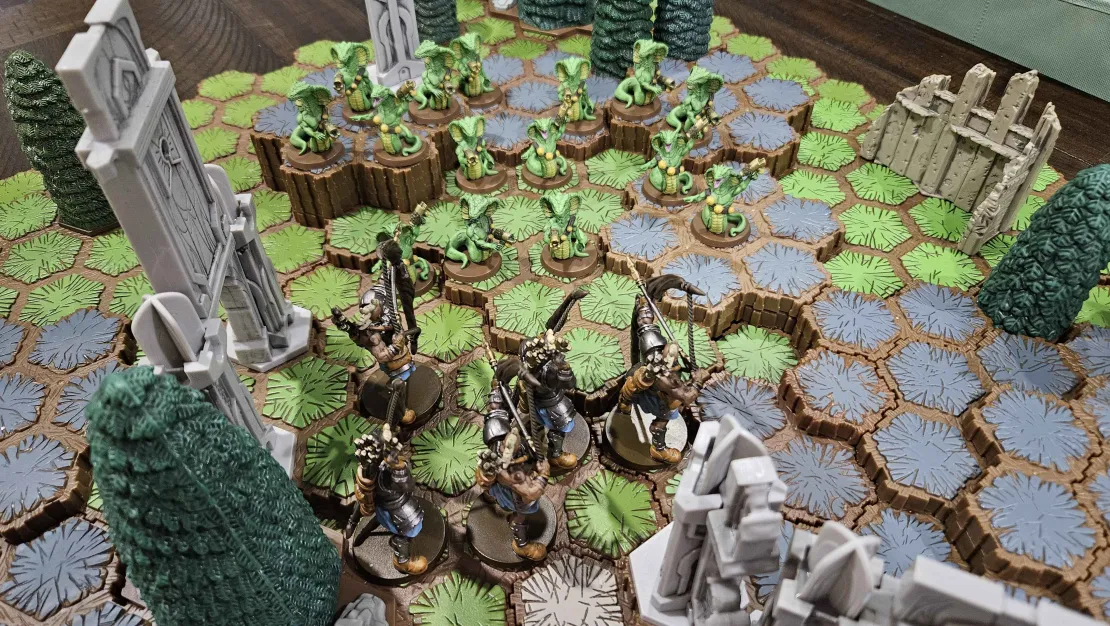
This 50-point, fast-moving, ranged, common squad will either be a great compliment to round out the last couple hundred points of an army, or can be the focal point of the army alongside a heavy hitter like Major Q11, standing by as reinforcement.
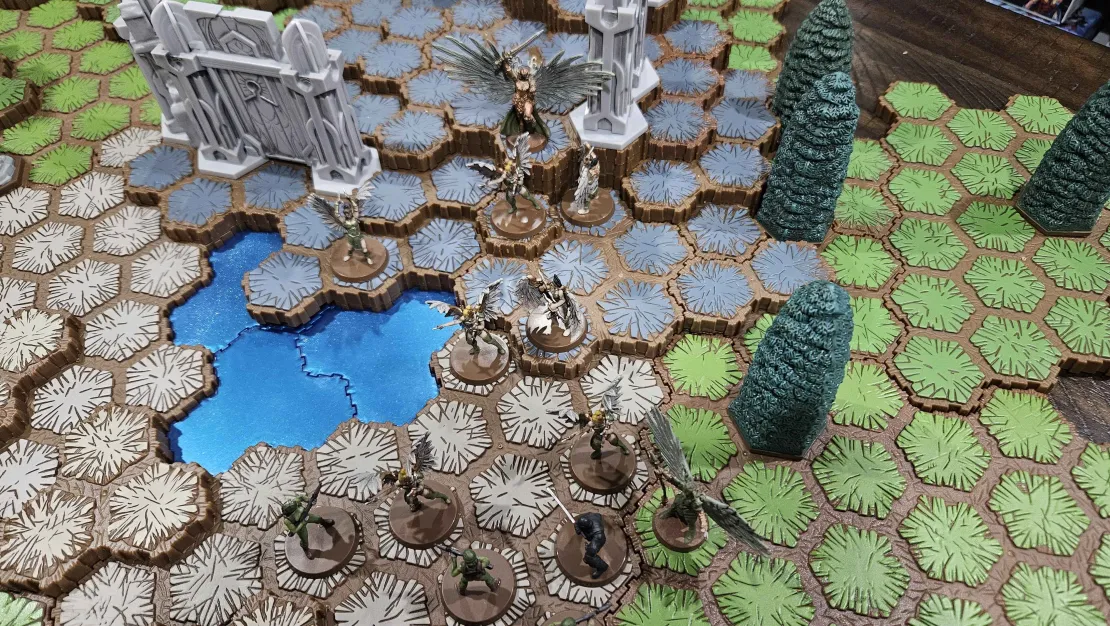
Ullar adds even more common squads to his ranks with the Elites of Ullar. When teamed up with Xiamara the Kyrie Warrior and Mielki the Kyrie Warrior, they become one of the most durable squads in the game, as with Xiamara’s Amulet of Paivatar and Mielki’s Spear of Sankari, the Elites of Ullar refuse to die.
Ullar’ Pact will keep the ranks of Elites flowing forward on the battlefield and keep Xiamara close enough to use her amulet. With the Elites' durability, they will generally be able to stay engaged long enough for Mielki, with her double attack of 4, to take advantage of their Blade Dance ability. Flying will make height more easily accessible, and combined with Blade Dance Mielki will be throwing hard-hitting attacks to defeat enemies while healing wounded Elites with her Spear of Sankari.
The trickiest part of this combo is when and where to put your Order Markers. Timing Mielki for a hard-hitting double attack could make or break the game for you, while keeping Xiamara protected is also a must. You want to keep her close enough to use the amulet, but far enough away that any Phantom Walking ninjas don’t get any clever assassination ideas. The Elites will have a chance to shine in mid-to-higher point/lower figure limit formats; a standard army being Elites x3, Mielki, and Xiamara at 495 points/11 figures.
Ullar has one last figure in this wave, who is likely familiar to all of us: Syvarris is back! His stat line is very familiar, except for a slight increase in attack and points. This Syvarris hits harder but loses the ability to double attack from range 9. However, unlike his predecessor, this Syvarris can attack up to three times with Volley Unto Himself if he is within three spaces of his target(s). We are used to using Syvarris as a long-range attacker, but this version is more versatile, as he can still take one shot from range 9, get two shots from range 6, or three shots from range 3.
Is the extra attack worth the extra 10 points when he can’t attack twice from 9 range? This Syvarris plays a bit more aggressively, if you want to squeeze out all the attacks you can, but that also can expose him to more danger. 4 Life and 2 Defense does not scream survivability (one good attack and he’s gone). Using Syvarris at 9 range still has a lot of advantages, but at some point, the enemy will close in on him. The closer they get, the more attacks he’s hitting back with, and three attacks of 4 dice is more than some common squads are capable of. Managing Syvarris’ threat range will take some thought, as it’s no longer as simple as getting as far away as possible and attacking twice, like it often was in the past.
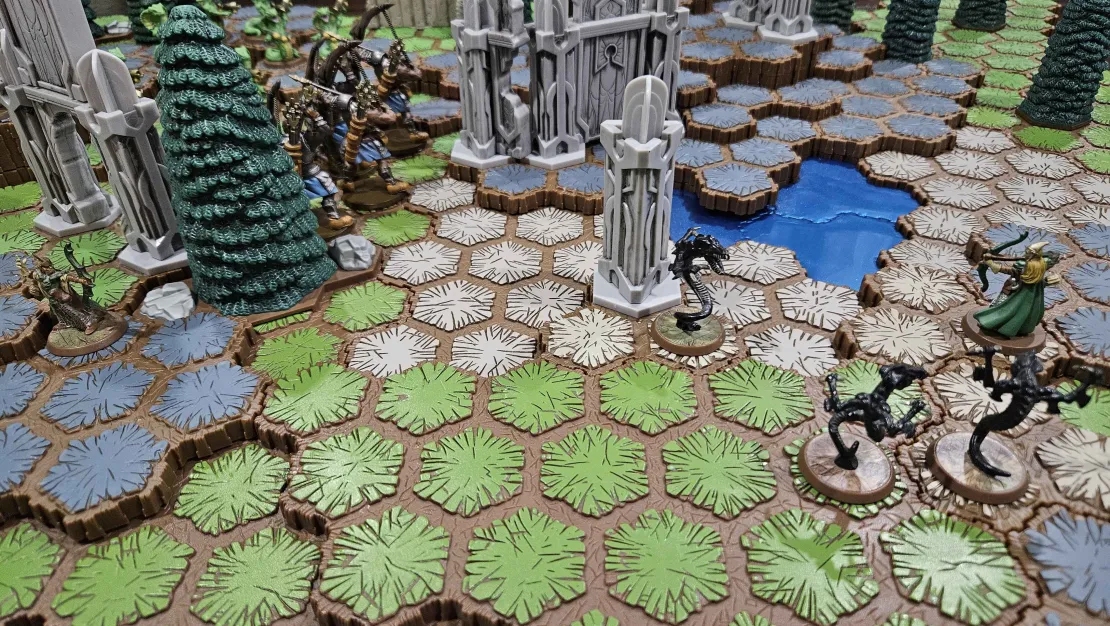
More Gruts have come to Valhalla, but perhaps surprisingly not via Utgar. Volarak brings us Chain Gruts, our first foray into a four-figure melee common squad with bonding in Contemporary. The Heavy Gruts, and even the Blade Gruts, have seen much success over the years, but will the Chain Gruts be able to follow in their footsteps?
Two Attack seems poor at first glance, especially since the Chain Gruts are not Warriors and don’t get the Orc Warrior Enhancement from Grimnak or Tornak, nor Ornac’s Orc Battle Cry Aura. The Chain Gruts do, however, have Chain Axes, which we first saw on Dorim the Bulkhead Brawler. A better way to think about this attack of two dice is an attack of three, with a two-skull maximum, meaning you are going to get two skulls much more often.
Much like their brethren, the Chain Gruts do have bonding; however, their bonding is more versatile as it includes not only the Orc Champions of old, but also the Volarak Champions of this new era. Nerak still gives them his Orc Defense Aura 1, and they can also bond with the likes of Tuck Harrigan and Decker, among others. Having the option to bond with a chomper (Grimnak) and a stomper (Imperator Kayne) gives the Chain Gruts many more options then their older kin.
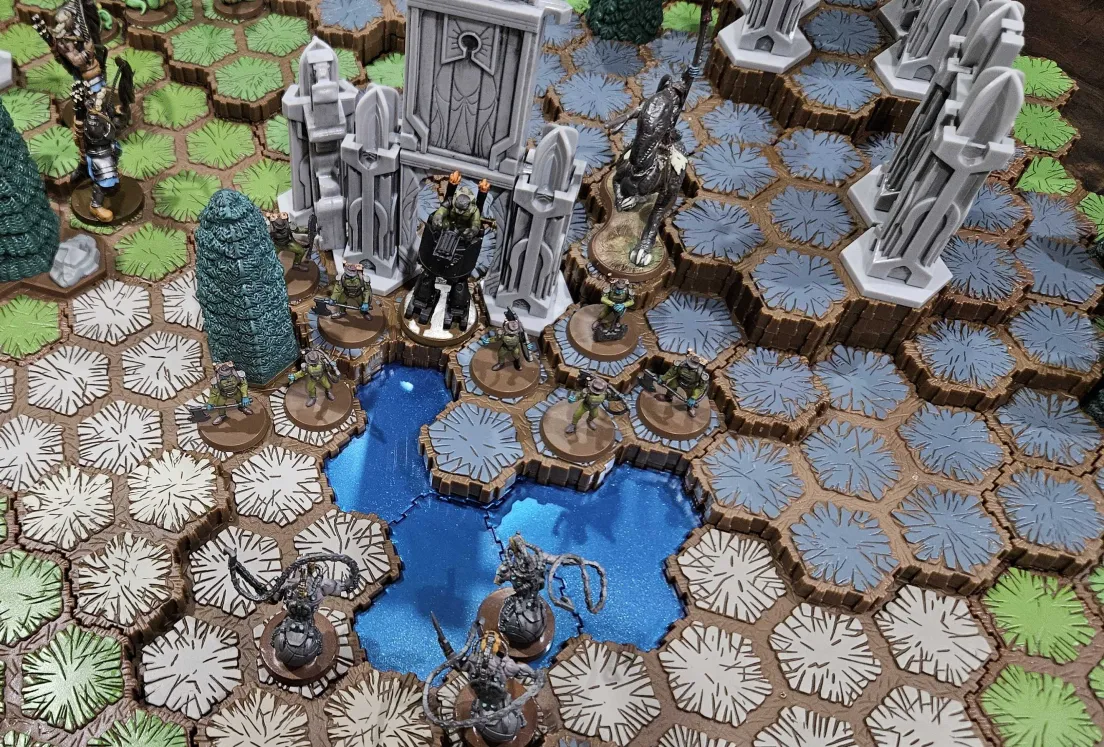
A notable difference between the Chain Gruts and their prehistoric cousins is that the Chain Gruts do not have Disengage. One of the staples of Orc armies has been the ability to just run around and attack whatever you want without being tied down by the threat of Leaving Engagement Attacks. What the Chain Gruts do offer is the ability to give disengage to other units with Strong-Arm. A disengaging Grimnak will strike fear in the eyes of your opponent just when they thought they had him tied down. The only caveat is that the Chain Gruts activate after their Champion, so the setup for Strong-Arm can be tricky, as it has to be done on the previous turn—an excellent thing to keep in mind on your OM 3s going into a potential Initiative Switch.
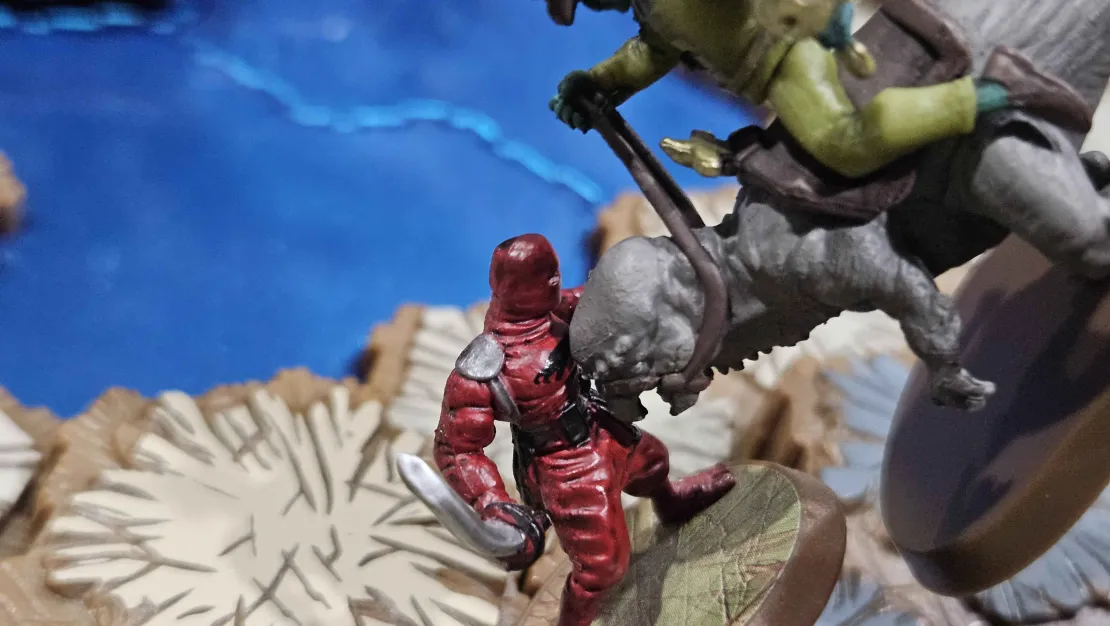
The Chain Gruts did bring their own Champion with them in the box: the Ramosaur Rider. These fast-moving units with First Assault 1 will definitely want to take advantage of the Strong-Arm ability the Chain Gruts offer. Where the Ramosaur Rider really shines is with the Headbutt ability. We haven’t seen anything quite like it before, and it gives you even more chances of dealing a wound. Are you tired of Isamu vanishing on you? Headbutt is your answer, but it also has other interesting interactions throughout Valhalla, as he also bonds with the Death Chasers of Thesk.
For 35 points, the Ramosaur Rider is a bargain; the biggest issue he will have is vying for a spot in an army with so many other high-value options available for both the Chain Gruts and Death Chasers.
Gathering Storm brings fun and competitive choices to the Contemporary meta. What Champion will you choose to bring alongside your Chain Gruts? How many Elites will Xiamara’s amulet save, on average? What is the optimum number of Ranocs to have in an army? Will Syvarris wish he still had just plain double attack? Only time will tell us the answers.
Until next time, Happy Scaping!
Photos by Vecna